Winning the Race to Power: Behind-the-Meter Generation as a Competitive Advantage for Large Loads
[datacenter_tag_image]
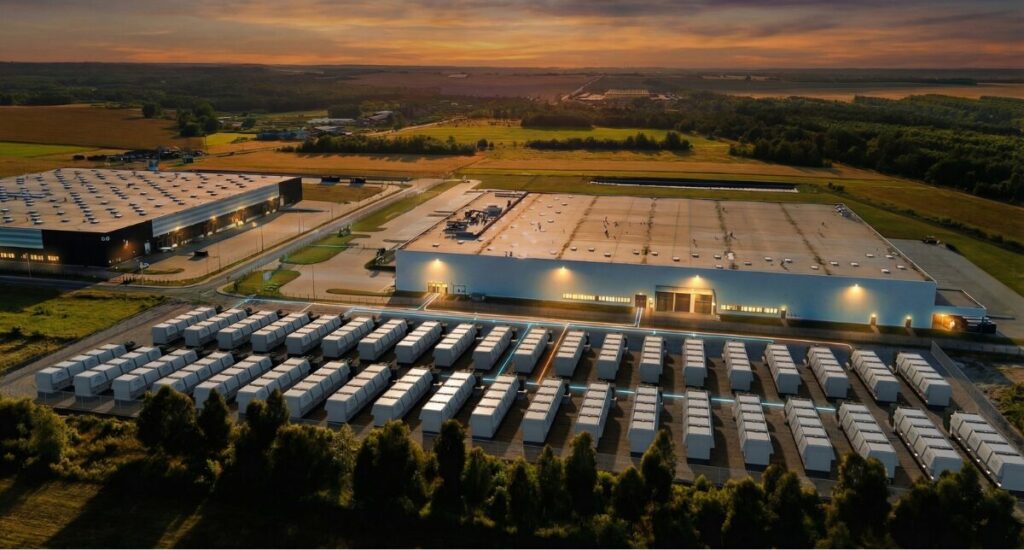

Behind-the-meter (BTM) generation has long been framed in the familiar terms of cost savings, resilience, and operational control. These benefits remain real and measurable, but they no longer fully capture the role BTM is beginning to play in a power-constrained environment.
For power-intensive industries like data centers and advanced manufacturing, the power constraints have shifted. The limiting factor is no longer capital or demand. It is access to power, and more specifically, speed to power.
Interconnection timelines have stretched into years. Transmission expansion and system planning processes are struggling to keep pace with accelerating demand driven by AI, electrification, and digital infrastructure. In this environment, BTM generation is emerging as a speed-to-power strategy that translates directly into a competitive advantage for the businesses that install it.
Importantly, BTM generation is not a replacement for the grid, but a complement to it. The grid remains a critical component of the broader energy system, particularly for balancing, resilience, and long-term scalability. When strategically deployed, BTM generation strengthens the system as a grid asset, enabling a win for the utility, the data center, and the surrounding community.
Controlling power delivery, not waiting for it
BTM generation allows owners to directly control their energy supply rather than waiting on grid expansion timelines. By producing power onsite, organizations reduce exposure not only to utility rate structures and tariff volatility, but also to the uncertainty associated with interconnection queues and infrastructure readiness.
This shift introduces a more predictable operating model. Power transitions from a variable, external dependency into a forecastable and controllable input aligned with project timelines. For organizations pursuing rapid expansion, this autonomy directly supports speed to power by removing one of the most significant bottlenecks in development.
At a technical level, this control is achieved through the co-location of generation and load, reducing reliance on upstream transmission capacity, and utility expansion timelines. The result is a system architecture where power delivery is governed by asset deployment rather than grid availability.
Aligning generation with load for maximum efficiency
Because BTM assets are deployed on the customer side of the meter, their output can be precisely aligned with facility load profiles. This enables a level of operational optimization that is not achievable with front-of-the-meter (FTM) generation.
Facilities can actively shape their load curves by dispatching onsite generation during peak intervals, reducing demand charges and smoothing consumption patterns. This is particularly relevant in markets where demand charges represent a significant portion of total energy cost.
Alignment between generation and load allows organizations to minimize high-cost demand peaks and reduce overall cost of service through targeted dispatch strategies. More importantly, it enables real-time control over energy consumption, allowing operators to respond dynamically to both internal load conditions and external price signals.
This enables a range of optimization strategies:
- Peak shaving and demand charge mitigation through targeted dispatch during high-load intervals
- Load following, where generation output dynamically tracks real-time consumption
- Energy arbitrage, when paired with storage, by shifting consumption across time-of-use price differentials
- Power quality management, including voltage and frequency stability at the facility level
Because the generation is co-located with the load, these strategies can be executed with a level of precision that is not achievable in grid-sited configurations.
Designing reliability at the facility level
BTM generation shifts the reliability model from utility-dependent to self-directed. Instead of relying solely on grid-level service standards, organizations can design reliability into their own systems. This includes the ability to configure redundancy, integrate uninterruptible power supply systems, and implement islanding capabilities that allow facilities to operate independently during grid disturbances. For mission-critical environments such as data centers, manufacturing plants, and healthcare facilities, this level of control is essential.
BTM systems enable continued operation through outages and market disruptions, reducing downtime risk and supporting business continuity. In the context of speed to power, this reliability is not just about protection; it ensures that once operations begin, they can continue without interruption, preserving the advantage gained through faster deployment.
Scaling energy to support growth and sustainability demands
BTM generation provides a flexible platform for integrating renewable energy and supporting electrification initiatives. As organizations adopt electric fleets, heat pumps, and electrified industrial processes, onsite generation can be scaled to offset incremental load. Solar, storage, and other distributed resources can be integrated into the BTM system, creating a modular and adaptable energy architecture.
This flexibility allows owners to pursue sustainability objectives without being constrained by utility timelines, further reinforcing speed to power as both a deployment and decarbonization strategy.
Selective grid engagement and direct value realization
Traditionally, BTM assets have minimal, if any, requirements to participate in grid services or ancillary markets. This distinction provides a level of operational and financial flexibility that is often overlooked.
From a technical perspective, advanced control systems and metering infrastructure allow these assets to operate dynamically. Generation can be dispatched in real time to match facility load, while also maintaining the capability to export excess power for grid support or to respond to price signals when conditions are favorable. This enables selective participation in programs such as demand response or real-time energy markets without long-term commitments.
The result is a dual-operating model where energy can be optimized internally while preserving the option to engage externally. This transforms BTM flexibility into a financial asset rather than a constraint, while also benefitting the grid.
With FTM generation, the value of energy assets is distributed across all ratepayers. BTM generation fundamentally changes this dynamic by internalizing value within the organization. All economic benefits accrue directly to the asset owner, including avoided costs, operational efficiencies, and reliability improvements. There is no cost sharing or dilution of returns through regulated rate structures.
This creates stronger and more predictable return profiles, supporting investment decisions that are aligned with long-term strategic objectives.
A broader view: Complementary approaches to meeting rising power demand
As large-load growth accelerates, a range of strategies are being explored to meet demand, including grid optimization, virtual power plants, and enhanced coordination of distributed resources. These approaches focus on increasing efficiency within the existing system by orchestrating multiple assets across a broader network.
These models can play an important role in expanding system capacity and improving utilization. However, they rely on multi-party coordination, regulatory frameworks, and shared infrastructure. For organizations operating under tight timelines, these dependencies can introduce variability in both deployment and performance.
BTM generation offers a more direct path: delivering power at the point of use without reliance on external coordination. In practice, the two approaches are not mutually exclusive. They reflect different tools for different objectives—one focused on system-wide optimization, the other on localized control and deployment certainty.
Positioned to win the race to power
BTM generation has evolved from a cost-effective backup solution into a strategic infrastructure asset defined by its ability to accelerate deployment, enhance operational control, and internalize system value. Ken Yagelski affirms this concept in his recent post.
At the same time, speed to power has emerged as a defining competitive advantage. In today’s power-constrained environment, success will not be determined solely by how efficiently organizations use energy, but by how quickly they can secure and deploy it. BTM generation represents one of the most direct and technically viable paths to achieve that goal.
This article was originally published on LinkedIn.